
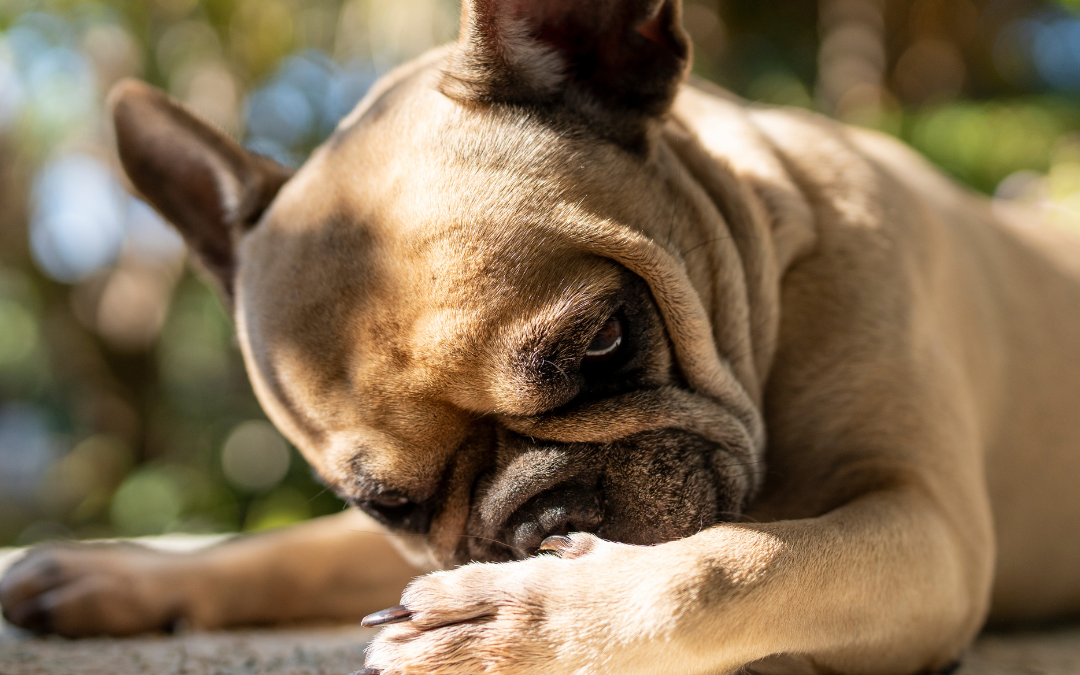
If your dog or cat can’t seem to stop scratching, chewing, or licking themselves, it’s easy to assume they have a food allergy. But the truth is, while food can play a role, it’s not always the root cause of chronic itching.
Before you overhaul their diet or start guessing at food sensitivities, it’s important to understand the bigger picture. Itching can have many causes, and food allergies are just one piece of the puzzle.
Here’s what you need to know to get closer to real relief for your pet.
Food Allergies Are Real, But They’re Not the Most Common Cause
Despite what the commercials might tell you, true food allergies in pets are actually pretty rare. According to research published by the Merck Veterinary Manual, food allergies account for only about 10% of all allergy cases in dogs and even less in cats.
When food allergies do happen, they are often reactions to common proteins like chicken, beef, dairy, or eggs. Grains, despite popular belief, are a much less common culprit.
If your pet truly has a food allergy, you might see symptoms like:
- Itchy skin, especially around the face, ears, paws, or belly
- Chronic ear infections
- Digestive issues like diarrhea or vomiting
- Hair loss or inflamed skin
But in most cases of itching, something else is going on.
Environmental Allergies Are Often the Real Problem
In many pets, itching is caused by what’s called atopic dermatitis, which is an allergic reaction to environmental triggers. This could be anything from pollen to mold to household chemicals.
If your pet’s itching seems to flare up during certain seasons, after walks, or even after coming inside from the yard, it’s a big clue that the environment, not food, might be the main trigger.
Things that commonly trigger environmental allergies include:
- Grass, weeds, and trees
- Dust mites
- Household cleaners
- Laundry detergents
- Air fresheners or candles
- Fleas (even one bite can set off intense reactions)
Environmental allergies can look a lot like food allergies at first glance, but solving them usually involves a different approach, reducing exposure, supporting the immune system naturally, and healing the skin barrier.
Gut Health Can Make Itching Worse
Another layer to the itching mystery is gut health. Many pets have poor gut balance from years of processed foods, medications, vaccines, and chemical exposures. When the gut is inflamed or unbalanced, it can cause “leaky gut” syndrome, where proteins and toxins slip into the bloodstream and trigger allergic-type reactions.
This can make itching much worse, even if food or the environment wasn’t the original cause.
Supporting gut health through a cleaner diet, probiotics, and natural healing protocols can make a big difference in calming skin symptoms over time.
How to Know If It’s a Food Allergy
The only true way to diagnose a food allergy is through an elimination diet. That means feeding a very limited, novel diet (like a protein your pet has never eaten before) for 8-12 weeks and carefully watching symptoms. If the itching clears up during the trial and flares back when old foods are reintroduced, you might be looking at a food allergy.
But here’s the catch: this process takes time, patience, and usually some professional guidance. It’s not as simple as just switching to “grain-free” food off the shelf.
Many times, holistic support that addresses diet and environment at the same time brings faster and more lasting relief.
Final Thoughts
If your pet is constantly scratching, licking, or battling skin issues, it’s important not to jump straight to blaming their food. While food allergies are real, they are much less common than environmental allergies, gut imbalances, or toxin overload.
The good news is that a holistic approach that looks at diet, environment, immune function, and gut health can help you finally get to the bottom of it, and give your pet the relief they deserve.
If you’re tired of guessing and ready to get real answers, we’re here to help.
Book a consultation today and let’s build a healing plan that fits your pet’s needs naturally.